 +880 1631299995


This is the story of Taslima, a woman from Bangladesh.
Told by her brother, it is more than just an account of a medical journey—it is a message to all families fighting cancer: Even in the darkest hour, hope can still emerge.
No family is ever prepared for the word “cancer”. When it arrives, it brings not only pain and fear, but countless sleepless nights and an overwhelming sense of uncertainty about the future. This was the moment Taslima’s family found themselves at a crossroads of fate. Yet it is precisely in such times that love and kinship become the strength that carries people forward.
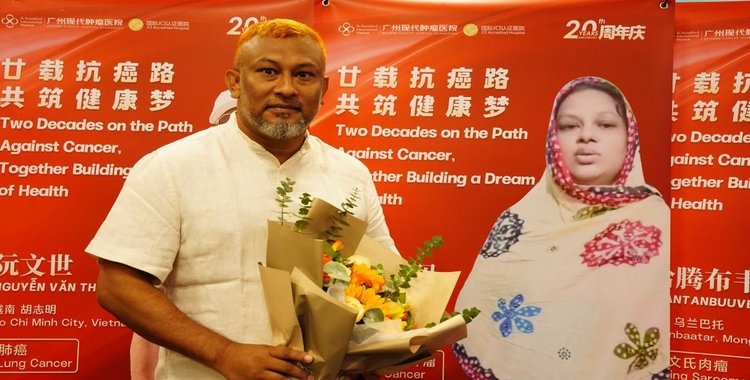
Taslima’s Brother
At First, Nothing Seemed Too Serious
In 2023, Taslima began experiencing occasional dull pain in her left leg. Hospitals in Bangladesh attributed it to common neuralgia and did not give it serious attention. She, too, naively believed that perhaps it would improve with rest. Yet, the pain did not go away. Time, like a slow blade, quietly deepened her suffering. By February 2025, she could barely walk normally. The pain had become severe and frequent at night, severely affecting her sleep and daily life. When she sought medical help again, a series of examination results shattered all hope. An MRI of her lumbar spine and sacroiliac joints revealed:
- Tumor-induced bone destruction in the left hemipelvis
- Tumor invasion into the neural foramen and spinal canal
Subsequent pathological biopsy confirmed the most heart-wrenching result: Stage IV thyroid cancer, with pelvic and bone metastases.
“The moment she heard ‘cancer,’ she was completely stunned,” recalled Taslima’s brother. Within just a few months, Taslima had lost 12 kilograms. The persistent severe pain in her lower limbs nearly robbed her of the ability to live independently. The future, at that moment, became blurred and distant. Watching her increasingly frail body, Taslima’s family felt both anxious and helpless—yet they never stopped searching for possible treatments. It was this unwavering perseverance that ultimately led them to a new beacon of hope: Modern Cancer Hospital Guangzhou.
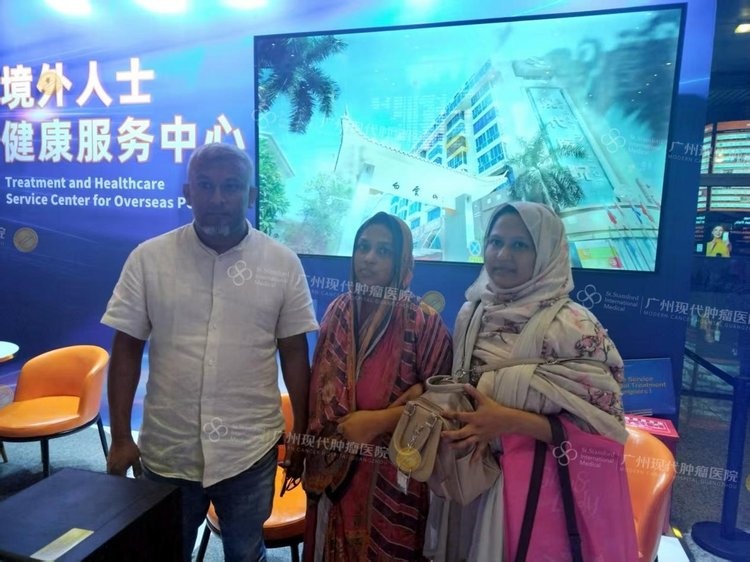
Taslima Arrived in Guangzhou with Her Family
Light Of Hope Pierces The Darkness: Minimally Invasive Treatment Restores Her Confidence
During that period, our family kept searching for information and consulting everywhere, yet it felt like fumbling through a fog, with no clear direction in sight. But a voice within never faded: We would never give up. It was through persistent research and inquiries that Modern Cancer Hospital Guangzhou came into our view, offering us our first glimpse of a cautious yet genuine hope.
What truly convinced us was not only the treatment technology here but also the doctors' approach to patients. They focus not only on combating the cancer but also on ensuring my sister could maintain her dignity and quality of life throughout the treatment. Given this comprehensive consideration, and after learning that her condition was complex and her body might not withstand conventional high-intensity therapy, we made the resolute decision to come here, hoping to find a path better suited for her.
After admission, the medical team conducted a comprehensive and meticulous evaluation for my sister. The doctors clearly explained to us that she had been diagnosed with stage IV thyroid cancer, with severe pelvic invasion, and that the long-term pain had significantly impacted her daily life. However, they also emphasized that there was still hope for treatment, with the key lying in precise evaluation and tailored therapeutic strategies.
Taking into consideration her inability to lie flat for extended periods, significant pain, and severe bone destruction, the doctors tailored an individualized treatment plan specifically for her. Through CT-guided radioactive seed implantation therapy, the therapeutic effects were sustained and precisely targeted at the lesion area. This approach not only alleviated the physical burden on her body but also gradually relieved her pain.
Meanwhile, the doctors have supplemented the treatment with targeted medications to control disease progression and maintain her overall condition. As time passed, follow-up imaging scans have, time after time, brought encouraging news: The tumor has gradually shrunk, and necrosis changes have begun to appear within it. These changes have brought us a sense of stability and reassurance.
One day, my sister softly said something to me that I still remember clearly:
“My body doesn't feel as heavy as before.”
She wasn’t talking about recovery.
She was saying that she finally had the strength to confront it.
As her brother, at that moment, the heavy stone that had long weighed on my heart seemed to ease a little. I finally felt a sense of relief and regained confidence in the path ahead.
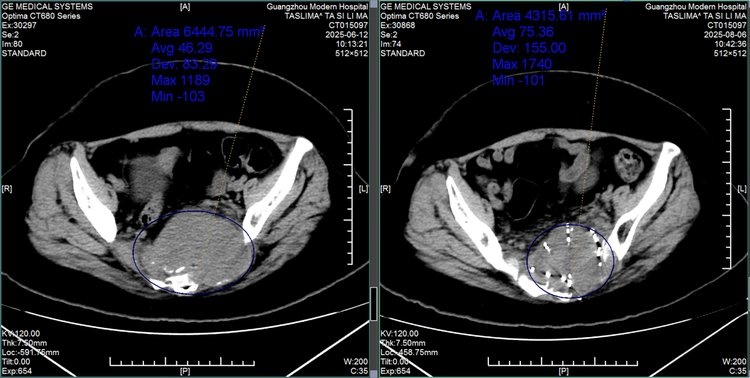
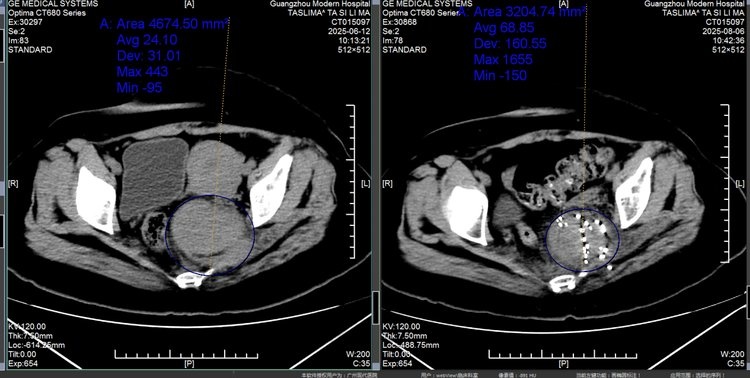
Comparison of CT Scans Before and After Treatment
Understood And Respected, Truly, In A Foreign Land
For us, seeking treatment abroad meant that our greatest concerns extended beyond the illness itself to include language, diet, and faith.
What put my mind at ease was that the hospital provided us with Bengali translation services.
Whether communicating with doctors about her condition or understanding examinations and treatment plans, there was always someone patiently helping to explain everything. We never had to worry about misunderstanding or fear making the wrong decision.
Regarding meals, the hospital provided my sister with halal food.
At a time when she was physically at her weakest, being able to eat food that aligned with her faith and habits meant more than just nourishment—it gave her a profound sense of being respected.
Additionally, the hospital has a prayer room.
Whether awaiting test results or between treatments, we could pray quietly, allowing our hearts to gradually find peace. In those moments, we no longer felt like strangers in a foreign land.
These seemingly small arrangements made us deeply feel: Here, they are not only treating a patient but also respecting her culture, faith, and way of life.
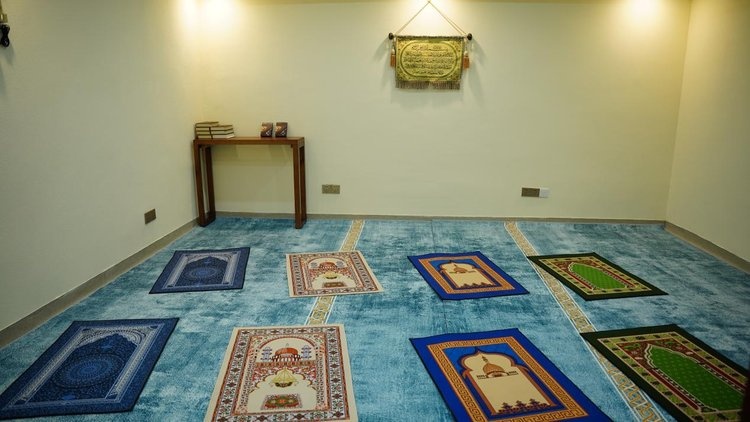
The Prayer Room in the Hospital
Returning To Life: Every Step Is A Celebration
As her pain gradually eased, Taslima slowly resumed her previous rhythm of life.
She began to walk independently again and no longer woke up suddenly at night due to pain.
Taslima’s brother said with a smile, “Being able to walk freely again is nothing short of a rebirth for my sister.”
However, the journey of cancer treatment is not entirely smooth. She still occasionally experiences skin itching, joint pain, constipation, and other discomforts. Each time, the doctors promptly follow up, adjust her treatment plan, and provide the most detailed guidance. It is this patient, cross-cultural companionship that makes her feel she has never been alone, even in a foreign land.
When Taslima returned to Modern Cancer Hospital Guangzhou, her identity had quietly changed. She was no longer just the patient who arrived in pain and full of anxiety but walked into the familiar consultation room with stable treatment results and regained strength.
After carefully reviewing her latest imaging data, the doctor offered a firm yet gentle conclusion—the efficacy was evaluated as partial response (PR). “Keep going, we will always be with you.” These simple words left a lasting impression on us. My sister stood there, bowed deeply, and said with a trembling voice, “Thank you for allowing me to continue living.” In that moment, medical care was no longer just about images, data, and plans—it became a tangible sense of companionship and trust that we could truly feel.
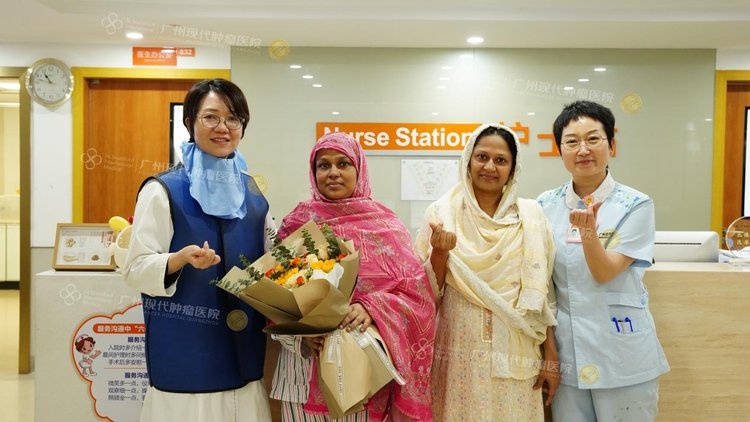
Taslima with Her Doctor
Echo of Hope: Lighting the Way for Others with Her Experience
My sister understands clearly that the road ahead remains a long-term journey of fighting cancer, yet fear no longer occupies her heart. Having endured pain, helplessness, and difficult choices, she has learned how to coexist with the illness and is now willing to share her story. She hopes to tell newly diagnosed patients not to rush into despair; to tell those in pain that they are not alone; and to tell those still hesitating—the world is vast, and there is more than one choice. “Cancer is not the end,” she says. “As long as you don’t give up, there will always be light.”
Taslima’s story is not what one might call a miracle. It is the result of precise medical judgment, the thoughtful application of minimally invasive technology, the consistent support of compassionate care, and the unwavering belief of a family that refused to give up. Her return is a testament to courage; her perseverance, an echo of hope. At Modern Cancer Hospital Guangzhou, treatment has never been solely about battling the cancer—it is about walking alongside patients through their most difficult and least understood moments. Because every life deserves to be taken seriously.
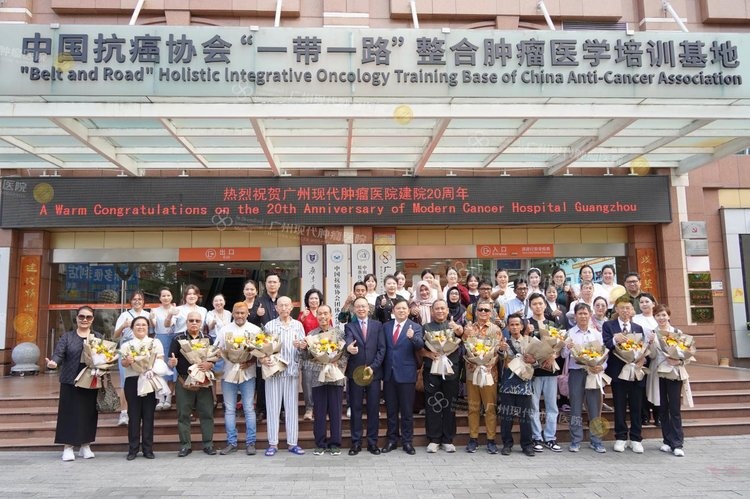
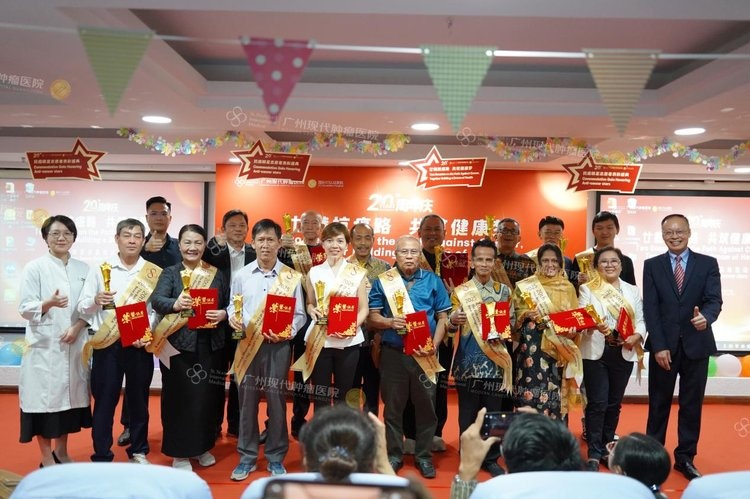
Taslima Attended 20th Anniversary Celebration as a Representative Cancer Fighter from Bangladesh
*Surgery, in addition to the appropriate chemotherapy and radiotherapy, are effective in treating early cancer, but certain patients in late stage of cancer may not be tolerate surgery well as they can be relatively weak. A combination of carefully planned minimally invasive therapy, chemotherapy or radiotherapy can effectively reduce the side effects and discomfort of treatment and may help patient get better efficacy.